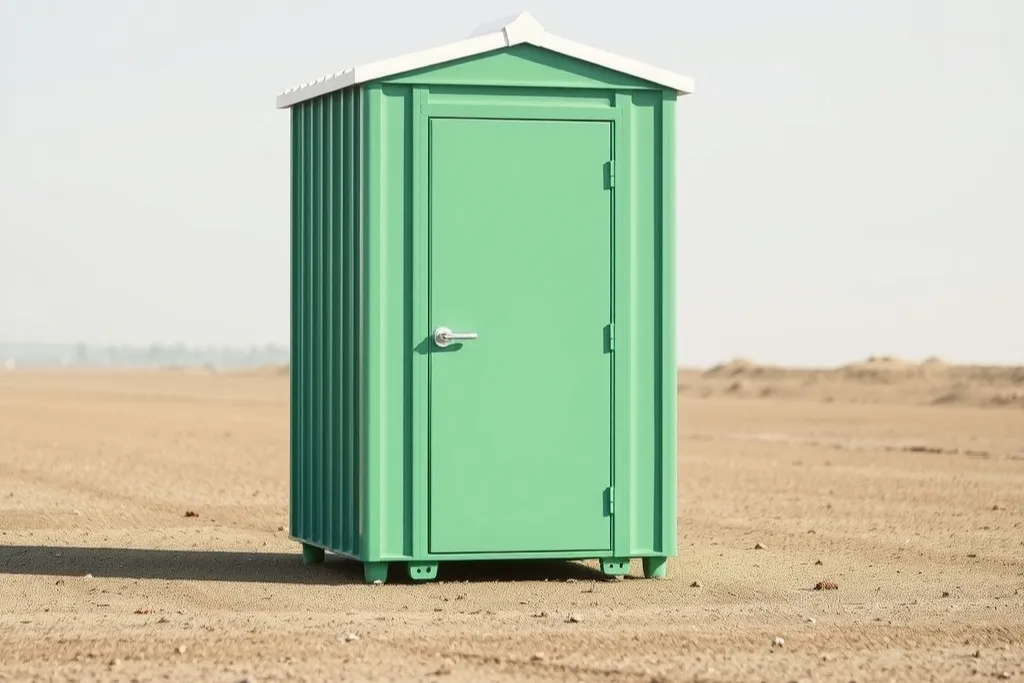
What does OSHA require for toilets on a construction site?
OSHA 29 CFR 1926.51(c) sets minimums by crew size: one toilet for 20 or fewer employees, one toilet seat and one urinal per 40 for 20 or more, and one per 50 for 200 or more. The contractor is responsible for the count, and for keeping toilets clean and serviced.
Assessment looks at more than the number. It considers whether employees can reach a toilet in under 10 minutes, so a count that meets the table on paper can still fall short on a big or tall site where units are far from the work.
This page quotes the federal table only. We have no sourced Philadelphia rule for toilets on construction sites beyond OSHA, so the site manager confirms any other requirement with the city and with the owner.
How do big Philadelphia builds change the plan?
Big builds need standing arrangements, planned moves and review at every phase. Schuylkill Yards is expected to create about 10,000 construction jobs, the Navy Yard is a 109-acre plan, and Cherry Hill's Garden State Park is zoned for 1,644 units. A project of that length is a different quote from a one-month job.
Schuylkill Yards broke ground in November 2017, with Drexel Square at 30th and Market Streets as the first phase. The Navy Yard's first residential buildings, AVE Constitution with 347 units and AVE Normandy with 267 units, have opened. Sites like these bring changing crews and moving work zones.
On a multi-year site, talk to the provider about a standing arrangement and a review point at each phase. The long-term portable toilet rental page covers what to ask.
What about cramped city sites and rowhouse blocks?
Cramped sites need access planning before anything else. Philadelphia rowhouses sit on narrow lots on gridiron streets, so a delivery truck has little room. Ask the provider about access first, and expect a unit to stand on a pavement or driveway, which needs the owner's or the city's permission.
In Fishtown, former factory ground has filled with new townhomes and condos, so building sites are common and delivery routes need planning. In Old City and Society Hill, many buildings are protected historic fabric, and a unit on a pavement or in a courtyard needs the owner's or the city's permission.
For a single-house renovation, see rowhouse renovation toilets, and for count questions see how many portable toilets a construction site needs.
How do heat and winter affect a construction rental?
Heat means more servicing visits and shaded placement; freezing weather means a winter additive, a cleared approach and a plan for ice. Philadelphia's July average high is 86 F, June 2025 reached 100 F, and January averages 41 F with snow in some winters, so both ends need planning.
On a hot day, crews drink more and use the units more, so the service plan from spring may not hold in July. Tell the provider if the schedule changes or if a hot week is forecast, and it can say what it can add.
A January 25, 2026 storm brought up to 9.5 inches of snow. After one, the units can be buried or the approach iced over. Keep the way clear and call the provider if a unit is blocked.